Printing Methods & Options Editorial team Document Printing · As of
5 Key Differences in Digital Printing vs Traditional Printing
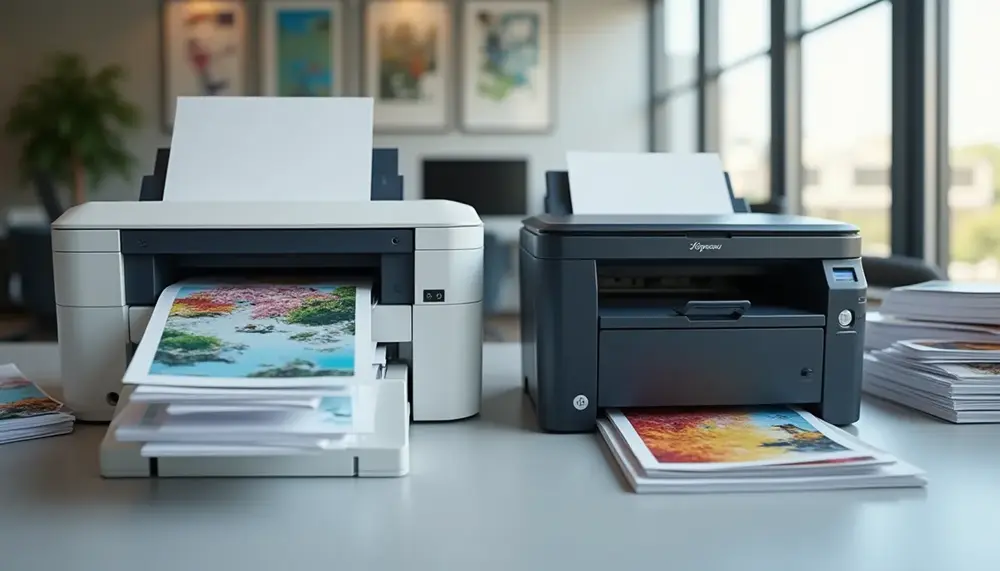 AI-generated image. It does not show real footage or any specific device. More about our images
Setup Process Differences
The setup process is a critical factor that differentiates digital printing from traditional printing methods like offset and screen printing. Understanding these differences can greatly impact the efficiency and cost-effectiveness of printing projects.
Digital Printing Setup: In digital printing, the process begins with digital files that are ready for immediate use. This means that there are no physical plates or screens to create, which drastically reduces setup time. The digital printer can begin producing prints as soon as the files are uploaded, making it highly efficient for small runs or customized projects. Additionally, this process allows for quick adjustments and changes, accommodating last-minute modifications without incurring additional costs or delays.
Traditional Printing Setup: On the other hand, traditional methods such as offset printing require extensive setup. For offset printing, the creation of printing plates is necessary, a process that can be both time-consuming and expensive. Each color in the design typically requires a separate plate, adding to the complexity and time needed before production can even begin. Similarly, screen printing also involves creating screens for each color, which can lead to increased costs and longer lead times.
Here are some key points to consider:
- Time Efficiency: Digital printing minimizes setup time, allowing for faster turnaround times.
- Cost Implications: Traditional methods often involve higher initial costs due to plate and screen creation.
- Flexibility: Digital printing allows for easy adjustments to designs, whereas traditional methods require redoing plates or screens.
- Volume Suitability: Digital printing is ideal for short runs, while traditional methods are more cost-effective for larger quantities.
In summary, the differences in setup processes between digital and traditional printing methods highlight the advantages of digital printing, especially for businesses looking to maximize efficiency and reduce costs. Understanding these nuances can help you make informed decisions for your printing needs.
Cost Implications
When evaluating the cost implications of digital versus traditional printing, it's essential to consider various factors that influence overall expenses. While initial setup costs are a significant aspect, ongoing costs and long-term savings also play a crucial role in the decision-making process.
Digital Printing Costs: Digital printing typically has lower upfront costs, especially for small to medium print runs. Since it eliminates the need for plates or screens, businesses can save on material and labor costs. Additionally, digital printing allows for on-demand production, meaning companies can print only what they need, reducing waste and storage costs.
Here are some cost-related advantages of digital printing:
- Minimal Setup Costs: With no plates or screens to create, digital printing requires significantly less investment at the outset.
- Reduced Waste: Print only what is necessary, minimizing excess inventory and associated costs.
- Fast Turnaround: Quicker production times mean faster delivery to clients, potentially leading to increased sales and customer satisfaction.
Traditional Printing Costs: In contrast, traditional methods, such as offset printing, often come with higher initial costs due to the necessity of creating plates. This can be particularly expensive for short runs, where the cost per unit increases significantly. Furthermore, traditional printing typically requires longer production times, which can lead to increased labor costs.
Consider the following points regarding traditional printing costs:
- High Initial Investment: The creation of plates or screens incurs significant expenses, especially for multi-color jobs.
- Higher Cost Per Unit: For smaller quantities, the cost per printed piece can be disproportionately high compared to digital methods.
- Longer Setup Times: Extended preparation and production times can delay delivery and impact cash flow.
In conclusion, while traditional printing might be more cost-effective for large volume runs, digital printing offers substantial savings and flexibility for smaller projects. As businesses continue to adapt to changing market demands, understanding these cost implications is vital for making informed decisions that align with both budgetary constraints and project requirements.
Print Quality Comparison
When it comes to print quality, digital and traditional printing methods each have their strengths and limitations. Understanding these differences can help businesses choose the right method for their specific needs, particularly when high-quality output is essential.
Digital Printing Quality: Digital printing excels in producing vibrant colors and intricate details, making it ideal for designs that require high resolution and clarity. The technology allows for a wider color gamut, which translates into more accurate color reproduction. This capability is especially beneficial for projects that involve photographic images or complex graphics. Additionally, digital printing utilizes advanced inkjet technology that can create smooth gradients and sharp text, enhancing the overall appearance of the printed material.
Some notable features of digital print quality include:
- High Resolution: Digital printers can achieve resolutions of up to 1200 dpi or higher, resulting in crisp and detailed images.
- Consistent Quality: Each print maintains uniformity, ensuring that colors and details remain consistent across multiple copies.
- Customization: Allows for variable data printing, where each piece can be personalized without sacrificing quality.
Traditional Printing Quality: Traditional printing methods, like offset printing, are renowned for their ability to produce high-quality prints, particularly for large volumes. The use of plates allows for precise ink application, resulting in deep, rich colors and sharp lines. Offset printing is often favored for projects requiring large runs, such as magazines or brochures, where maintaining consistent quality across a significant number of copies is crucial.
Key aspects of traditional print quality include:
- Color Depth: Offset printing can produce vivid colors with excellent saturation, particularly for solid colors.
- Texture and Finish: The ability to choose various paper types and finishes can enhance the tactile experience, adding value to the printed product.
- Cost-Effectiveness for Large Runs: While the initial setup costs are higher, the cost per unit decreases significantly with larger print quantities, making it ideal for bulk orders.
In summary, the choice between digital and traditional printing methods significantly impacts print quality. Digital printing offers superior detail and color accuracy for smaller runs and customized projects, while traditional methods excel in delivering rich colors and consistency for larger volumes. Understanding these distinctions is essential for selecting the right printing approach to meet specific project requirements.
Flexibility and Customization
Flexibility and customization are two of the standout features that set digital printing apart from traditional methods. In today's fast-paced market, the ability to adapt quickly to changing needs is crucial for businesses and designers alike.
Digital Printing Flexibility: One of the most significant advantages of digital printing is its inherent flexibility. This method allows for rapid changes to designs without the need for extensive reconfiguration. For instance, businesses can easily modify designs for different target audiences or seasonal promotions. This capability makes digital printing particularly valuable for short runs, as each printed piece can be unique without incurring substantial costs.
Moreover, digital printing supports a variety of substrates, including paper, fabric, and even unconventional materials like plastic and metal. This versatility enables companies to explore diverse applications, from promotional materials to custom packaging.
Customization Options: Digital printing excels in personalization. Businesses can leverage variable data printing, which allows them to customize each print piece with unique information, such as names or addresses. This level of customization enhances customer engagement and can significantly improve response rates in marketing campaigns.
Consider the following points regarding flexibility and customization in digital printing:
- Quick Turnaround: The ability to produce prints quickly enables businesses to respond to market demands and customer requests in real-time.
- Personalization: Tailoring prints to individual customers can lead to higher satisfaction and loyalty.
- Reduced Risk: Companies can test new designs or campaigns on a smaller scale without the financial risk associated with larger traditional runs.
Traditional Printing Limitations: In contrast, traditional printing methods often come with limitations in flexibility and customization. The setup processes for offset and screen printing typically require significant lead times and often involve a commitment to larger print runs. Adjusting designs in these methods can be cumbersome and costly, making them less suitable for projects that require frequent changes or personalization.
In summary, the flexibility and customization offered by digital printing empower businesses to innovate and respond to customer needs swiftly. This adaptability not only enhances operational efficiency but also allows for creative marketing strategies that can capture audience attention effectively.
Environmental Impact
As businesses and consumers become increasingly aware of environmental issues, the environmental impact of printing methods has gained significant attention. Both digital and traditional printing have their unique footprints, and understanding these can help make more sustainable choices.
Digital Printing and the Environment: Digital printing generally offers a more eco-friendly option compared to traditional methods. The absence of printing plates and screens means that less material is wasted during the setup process. Additionally, digital printing often uses water-based inks, which are less harmful to the environment than the solvent-based inks commonly found in traditional printing.
- Reduced Waste: Digital printing allows for on-demand printing, minimizing excess inventory and reducing the amount of paper and materials that end up in landfills.
- Lower Energy Consumption: Digital printers typically consume less energy during operation, contributing to a smaller carbon footprint.
- Recyclable Materials: Many digital printing processes utilize recyclable substrates, making it easier to reduce waste.
Traditional Printing Environmental Considerations: Traditional printing methods, such as offset and screen printing, can have a more significant environmental impact. The production of plates and screens requires additional materials and energy, leading to higher waste levels. Furthermore, the inks used in these processes can contain harmful chemicals that may not be environmentally friendly.
- Higher Material Waste: The setup for traditional printing often results in excess materials that are discarded, contributing to environmental degradation.
- Use of Harmful Chemicals: Some traditional inks contain volatile organic compounds (VOCs), which can be harmful to both health and the environment.
- Energy Intensive: The processes involved in traditional printing often consume more energy, particularly during the drying phase.
In summary, while both printing methods have their environmental impacts, digital printing generally presents a more sustainable option due to its reduced waste, lower energy consumption, and use of less harmful materials. As sustainability becomes a priority for many businesses, understanding these environmental implications will be crucial for making informed choices in the printing industry.
Frequently Asked Questions About Digital Printing vs Traditional Printing
What is the main difference in setup between digital and traditional printing?
Digital printing allows for immediate production from digital files without the need for physical plates, while traditional printing requires creating plates or screens, which can be time-consuming and costly.
How do the costs compare between digital and traditional printing?
Digital printing generally has lower upfront costs, especially for small runs, as it eliminates the need for plates and allows for print-on-demand. Traditional printing usually involves higher initial investments due to plate creation.
Which method offers better print quality?
Digital printing provides vibrant colors and high detail resolution, making it suitable for intricate designs. Traditional printing excels in producing rich colors and consistent quality, especially for larger quantities.
What are the customization options in each printing method?
Digital printing offers superior flexibility and customization options, allowing for variable data printing and rapid design changes. Traditional printing methods are less adaptable, typically requiring more setup to change designs.
How do digital and traditional printing impact the environment?
Digital printing is generally more environmentally friendly due to reduced waste and the use of less harmful inks. Traditional printing methods often involve higher material waste and the use of hazardous chemicals.
This post was created with the support of AI. More on this